Oxygen Not Included
If you have ever played the game Oxygen Not Included, a survival/space sim, you’ll have a good grasp of what head judging a 2000+ player event feels like. There are some quiet moments and there are some staggeringly difficult moments. It all comes together with how you can direct and manage the resources.
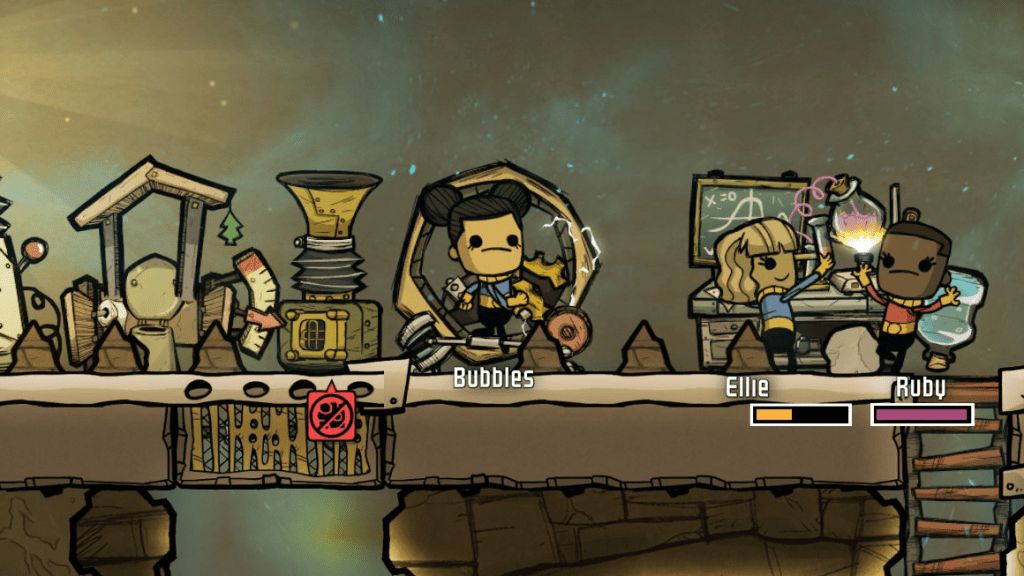
In the game, there are scientists you hire and direct to do tasks across the little rock you are trying to survive on. Build, re-wire, create a clean water system, create an oxygen system, ensure food, etc. These scientists generally know what they are about but can be given the wrong tasks or even try to be heroes and take on too much themselves. This leads to small cascading chains that can build up and start larger fires in the overall infrastructure. You as the overseer have to ensure this doesn’t happen. Or at least that it doesn’t happen in which your rock explodes and everyone dies.
It’s obviously not as dramatic at the DLC. Pastimes is there to help ensure no major fires and they have a great infrastructure already in place to prevent any disasters. The judges/lore guides are hired to work within that eco system and ensure a solid event. But there are times where small fires compound into larger ones. One small time extension suddenly bubbles up and causes longer delays. A wrong setting or not fully configured portion of Ravensburger Play Hub leads to confusion and needing to create new processes on the fly.
It is our job, as the lead lore guide, to ensure that all the small things that build up are smoothed out behind the scenes to prevent major mishaps and ensure customer satisfaction. I honestly believe that the entire team was able to deliver on that aspect.
Metrics Metrics Metrics
I honestly don’t know if I had any impact on the event. When I first started, I was trying to put on the boots of giants. During the last DLC I worked with amazing appeals and head judges in which I soaked as much information from them as I could in preparation for eventually being in their position. I just didn’t realize it would be so soon. I have been thanked by a lot of my friends who were at the event as well as others who know me from social media about just how well my event was, but honestly I attribute that to Pastimes.
Pastimes had listened to feedback and worked towards better serving customer expectations. Prizing and tickets were adjusted. More activations were had. Other than a prizing issue with a single event (which has now been addressed), I feel like almost everyone was happy with how they could participate and be awarded at the DLC. I saw many many people thanking Meg and Pastimes in the Pastimes Discord when just a week before there was so much vitriol in the same space as the days ticked down to the DLC.
One thing I am still learning is that if the system is working and working well, it’s almost invisible. It’s like having electricity. It’s there, it’s just part of your life. But the second that it’s out or there is an issue, it becomes a major thorn in your day. One measurable metric that I could time and check in on is our round turn overs. While these metrics aren’t exactly public, one of my appeals judges helped compile data on our round turn over times and well, anyone with a phone and a good notion of listening to when we call time can compile the same. Publicly, there were some grumbles about how long it took for players to start playing again, especially if they ended their match quickly.
Overall we averaged about 26 minutes from when I said “Illumineers in the main event, that is time in the round…” to “Illumineers pairings for your next round are posted…” Personally I can agree that I want to get that lower. But I’ve been told, it’s a fairly solid turn around time. On day 2, in a much less crowded room, our turn over times were 14 minutes!
A metric that is harder to measure is how much our floor judges were on the same page. A major hurdle I had was aligning judges to policies and behaviors. I made it a point to talk to all of the judges working the main event about how I wanted take backs to work in accordance to follow up discussions with Ravensburger as well as trying to ensure all judges kept a friendly demeanor and clean area for our players. What I failed (?) to do was communicate that clearly across the entire event. More on that in the next section though…
Communication
Let me preface this again that this was my first time Head Judging an event of this caliber. I have always been close to the leadership and have worked hard to get as much time/mentorship from other leaders but this was my first time taking the plunge as it were. There were definite gaps in communication both from myself and working with Pastimes as an org and that’s not really anyone’s fault. It was a mix of my own naivete and possibly Pastimes understanding of my experience. All in all, it left me with a lot of notes on how to improve.
When I first got the tap to be head judge, I immediately dived into all of the preparation work that I thought would be required. If you know me, I like to be as prepared as possible so that when things inevitably break, I have worked through some countermeasures or have thought through processes that can be in place to address it. Pastimes is a great tournament organizer with tons of experience, but they are also busy as heck. During their time of preparation, they had a Magic Con, a PAX, and the US holidays to contend with all leading up to DLC Richmond.
What that is all to say is that there was a lot of work I thought I needed to do that Pastimes did not want me to do and then a lot of work that I probably could have done better or focused on was not relayed to me. One of my key take aways from the weekend is that I could have set up some of my teams for better success by providing better structure/process/communication. In a previous blog post, I discuss the judge teams that are normally involved in running a large scale tournament. I trust every one of the leads that I worked with this past weekend but in some cases I put too much pressure on them.
Following back up with the metrics above. I should have given my End of Round lead much more flexibility and power, and empowered them to take more charge to ensure a swifter turn over rate. This was obviously handled from D1 to D2 (of the main event) but if I started off earlier, D1 could have had an even better time difference to DLC Milwaukee D1. In another instance, I worked with a different lead to create a plan for distributing promos. Pastimes has been doing this forever now and I should have asked them how better to create this plan than re-inventing the wheel.
I began writing this blog as a way to start aligning judges to my leadership style and how to address certain rules (take backs). But there was a lot that I also took for granted as having worked hundreds of events now as well as a lot of the North America DLCs. A few things I could have aligned all judges on was the importance of customer service and adding a bit of the Disney “white glove” magic to the event. If you heard me on the microphone this weekend, I always made sure to use the Ravensburger titles for both judges (lore guides) and players (illumineers).
One of the stories that hurt my heart from the weekend was a player who is a local of mine, tell me that a judge made her cry. From her story and corroborated by a more seasoned judged who addressed the issue, a judge had come to my friend and her opponent as they were beginning to play and told them that they did not have time to play their match and to just stop. When my friend was trying to explain that they were just told that time started, the judge had ignored them and told them they were incorrect instead of taking the time to hear the story and figure out what was going on.
Taking a moment to have aligned judges, especially newer judges, on how to interact with customers is honestly something that I should have broadcasted to everyone on staff. It may seem like a common sense thing but these important pieces of the Disney Lorcana experience are so key to what makes Disney Lorcana Disney Lorcana. To be clear, Pastimes also has a document that judges/staff are expected to read. Reiterating the importance to newer staff on why it is important to follow those guidelines and even embrace more Disney magic is something that I could have simply done before the show.
Key Takeaways
I am so proud to have been able to execute (and hopefully executed well) the DLC Richmond main event. I have learned so much and am constantly preparing and pushing myself for the next one (fingers crossed on what role I get!). But for anyone who is thinking of jumping into judge leadership, just consider a few of my lessons learned:
- Communication and alignment is key and must start from the ground up
- Setting expectations with the tournament organizer early is the best step to success
- Knowing your game and its audience will help you set player expectations
- Realize that you are not alone and you have a wonderful team of friends to support you through the event
- Any deviation in policy or new changes to policy must be expressly given to both players and staff so that it is reflected across the entire event
My Interesting Call
I will leave you all with my one interesting call that I got to take at the event. Keep in mind, you all might not like how I handled this but I truly believe I executed this in the faith that Ravensburger would have wanted it.
During round 2, on the feature match, Zach Bivens and Nathanael Schanie had a judge call. Schanie had boosted his Flynn Rider and then passed for turn. Within the 3 seconds Schanie said pass as Bivens was drawing his card, Schanie asked for a takeback.
The judge responding to the call took a look and thinking it through allowed for the takeback – while there was some new information being given to Zach, nothing new would change for Schanie. Zach appealed this call.
I responded and was thinking through how to best resolve the situation. In one instance we could allow for a rewind to place a card back on top of Zach’s deck, then allow Schanie to do this. Initially I was only going to allow Schanie to remove the boost and proceed. I took a second to think it through more and discussed the timeline/immediacy of the call with the players.
The players confirmed that the request for takeback was fairly immediate. That the card that was about to be drawn/was drawn could be identified. Schanie also discussed that he only had a single card in hand and wanted to do that instead of boosting. When I checked the card, it was a Gathering Knowledge and Wisdom.
With all these factors, I decided to uphold the judge call and allow Schanie to not boost the Flynn Rider and play the Gathering Knowledge and Wisdom instead, even though Zach had gained knowledge from his card. If Schanie had planned to play anything with hand manipulation (say a Mowgli – Bear Cub or Ursula – Deceiver), the call could have changed if we could not properly rewind through Zach’s card draw.
If you look at my article on take backs, what we really want to ensure is that players make the best decisions they can and if they don’t but immediately recognize that, we allow them the chance to rectify it. The factors on this take back, while abnormal, did not change what Schanie wanted to do. How many cards in Zach’s hand has no bearing on whether Schanie wants to boost or play Gathering Knowledge and Wisdom. The true factor here would be whether or not Schanie recognizes that Zach may have some kind of removal for the Flynn Rider and that his ink is better spent doing something else.
 Judging with Phil
Leave a comment